An umbrella can be useful without predicting the weather. An option overlay works in much the same way. Receiving a premium is one mechanism; deciding when and how much exposure to cover is another. A flexible tool still requires choices, and those choices can disappoint.
GPIX combines US large-cap stocks with an adjustable option-writing strategy. “Premium Income” describes a source of cash rather than a promise of interest. An option buyer pays for a contractual right. The seller receives cash while giving up part of a possible favorable outcome.
Start with the current name
The name in the issuer's 2026 materials is Goldman Sachs S&P 500 Premium Income ETF. Older articles may include the word “Core.” Checking the ticker GPIX alongside the current prospectus is more reliable than assuming every search result has been updated.
| Item | Information reviewed in 2026 |
|---|---|
| Ticker / launch | GPIX / October 24, 2023 |
| Equity foundation | US large caps drawn from S&P 500 companies |
| Income approach | An option overlay whose coverage can change |
| Distribution schedule | Monthly; amounts can vary |
| Gross / net annual expenses | 0.35% / 0.29% |
| Contractual waiver | Through at least April 30, 2027 |
Calling the cost simply “0.29% forever” would erase a condition. The current prospectus and issuer material distinguish gross expenses from the net figure after the fee waiver. Whether that arrangement is extended must be checked in the documents applicable at the time.
For scale, 0.29% of a constant $10,000 is $29, while 0.35% is $35. A real fund's asset value changes and expenses accrue through the fund, so this is an illustration rather than an invoice forecast. It also excludes personal taxes, brokerage charges and the bid-ask spread.
What changes when less is covered?
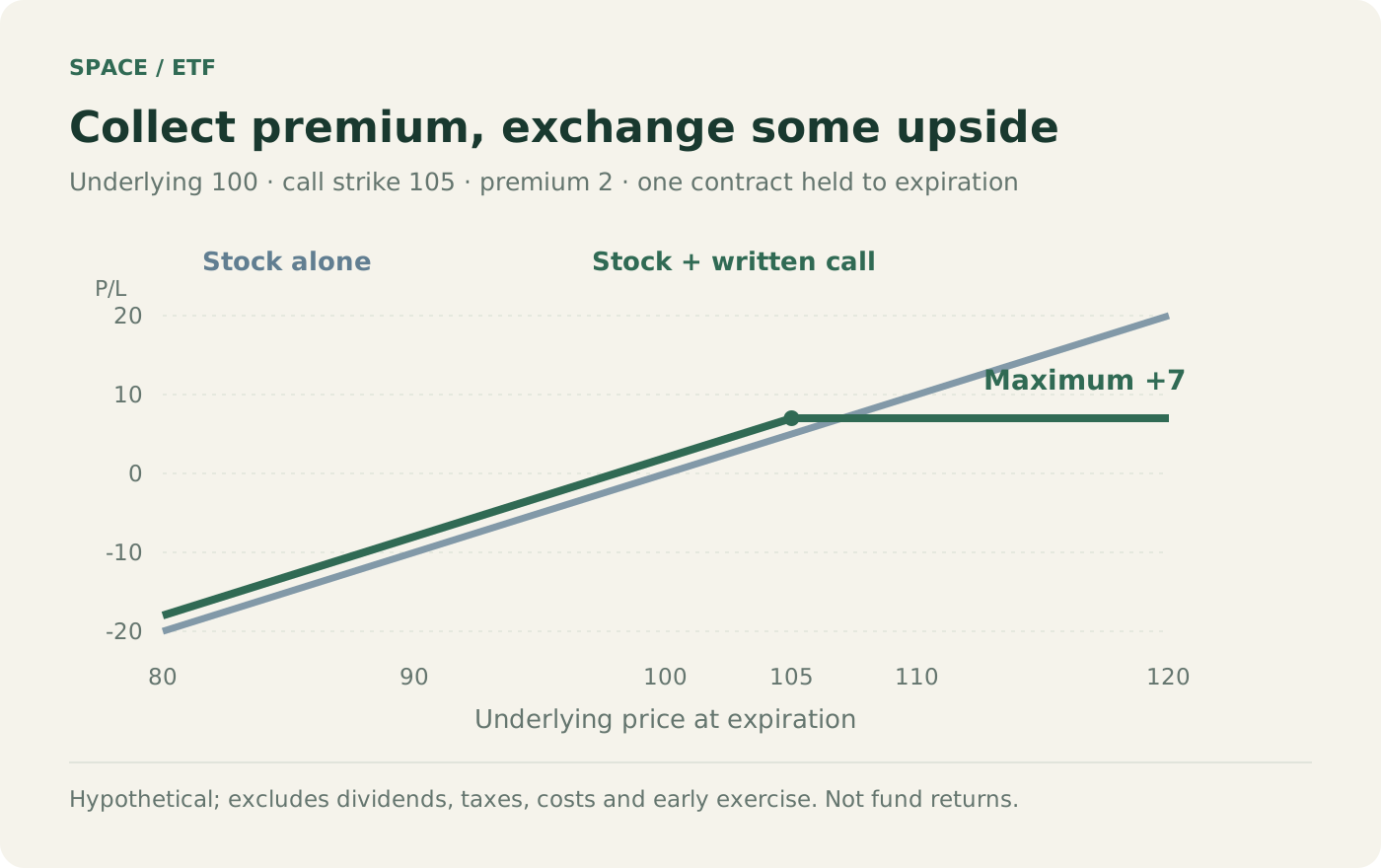
Writing calls against part of a portfolio differs from writing against the whole exposure. Less coverage generally leaves more room to participate in a rally, while changing the premium collected. More coverage can generate more immediate cash but can make a sharp rally more costly in forgone gains.
 View full-size figure (new tab) ↗
The diagram shows a simple contract held to expiration. It does not reproduce GPIX's actual option weights, maturities or trading path. In a real strategy, the timing of adjustments matters. “Dynamic” does not mean the manager will always make the right decision before the market moves.
Imagine reducing coverage in anticipation of a rally, followed instead by falling stocks. The portfolio still has equity losses and received less premium than under greater coverage. Conversely, selling more calls just before a strong rally can give away more gains. Flexibility expands the available choices; it does not eliminate the possibility of choosing poorly.
The strike price and expiration date matter alongside the percentage covered. Two overlays with the same headline coverage can create different outcomes if their contracts differ. A monthly cash payment cannot reveal all of those choices on its own. Reading the strategy section is therefore useful even when the fund's distribution history looks steady.
A shared starting point, a different journey
GPIX should not be expected to follow the exact return path of a plain S&P 500 tracker. Option gains and losses, expenses and portfolio management change the result. Having the index in the name does not deliver the entire index return with distributions added as a free extra.
For a performance comparison, use the same dates and align the treatment of reinvestment. If cash is spent from one investment and reinvested in another, comparing account balances alone mixes product performance with investor behavior. Both can matter, but they answer different questions.
The fund launched in 2023. A model describing how a strategy might have behaved in an earlier crisis is not GPIX's actual live record. Keep backtests and fund returns clearly separated. A long-looking chart should not be allowed to manufacture years the investment never experienced.
Choose an evaluation rule before a payment date
Keep three observations together: cash paid, capital still invested, and performance through both rallies and declines. A high distribution rate compresses none of those questions into a complete answer. It is possible to enjoy regular deposits while the value of the remaining investment disappoints.
Finally, decide what the cash is for. Someone spending the distributions and someone accumulating for a distant goal may assign different roles to the same strategy. GPIX is best understood through the exchange it makes between potential appreciation and current income, rather than through the prestige of the name on its cover.
Sources and dates
Reviewed on October 22, 2026. Observations belong to the dates stated in the text. Distributions and expenses can change.